
Team Health Scorecard
A free template to help you benchmark your team's effectiveness, assess team health, and understand areas of strength and opportunities for improvement.
Get my team health scorecard
Available as PDF or Word.
TL;DR
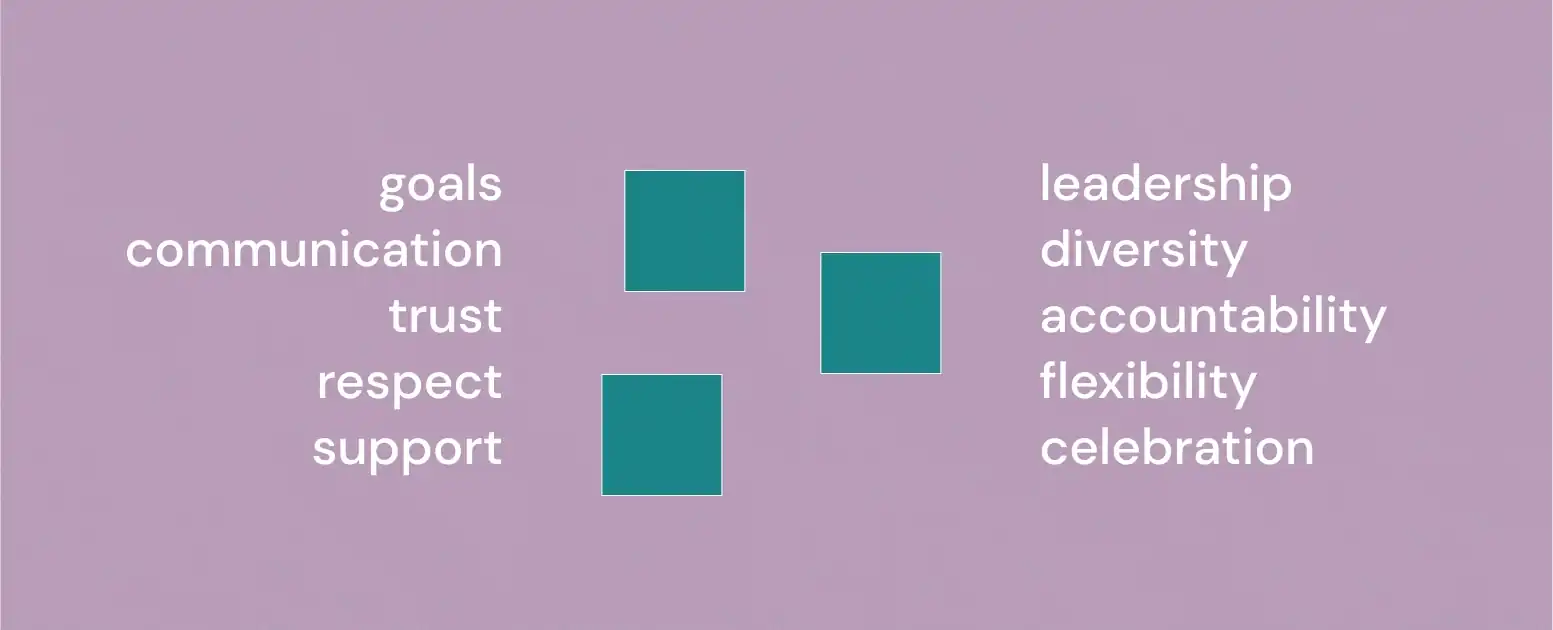
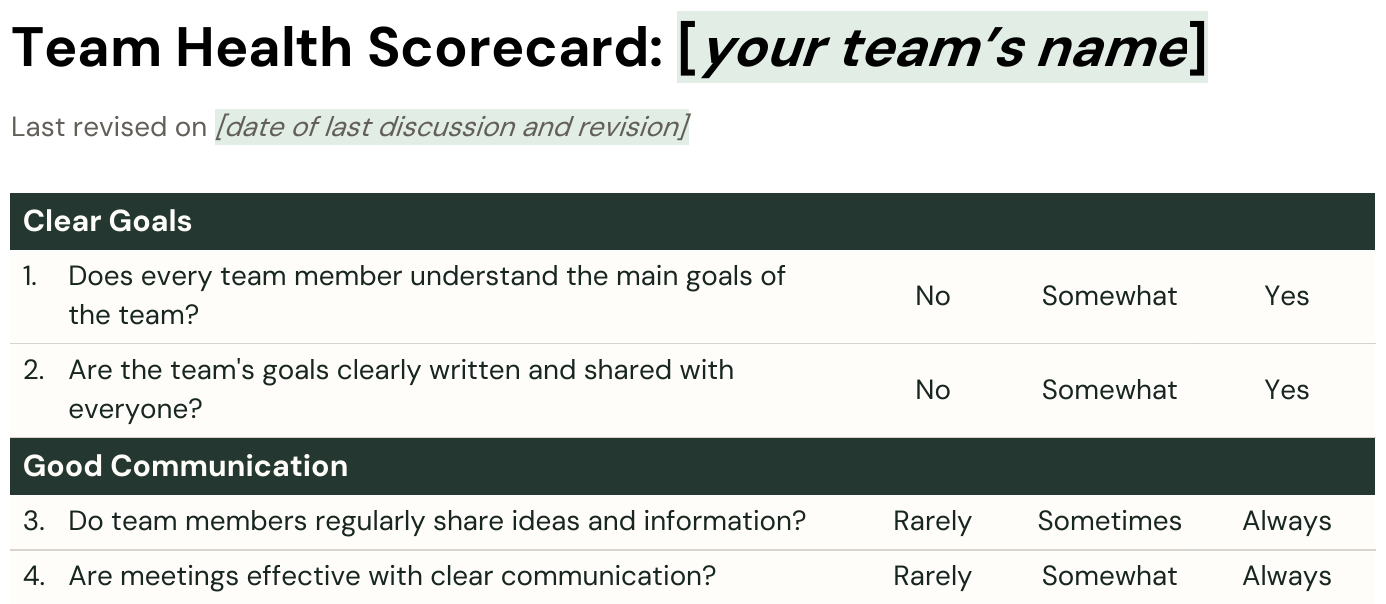
Use this 20-question worksheet either individually or as a team workshop activity to assess overall team health and score team performance along dimensions including...
- Goal setting
- Trust
- Leadership
- Accountability
...and more. Looking to get your team on the same page? Check out our free team agreement template.
Improving team effectiveness at work is like tuning a race car engine; every part needs to work in harmony. Our Team Health Scorecard questionnaire is the tool that can rev up your team's performance. This comprehensive guide will walk you through how to use this questionnaire in a team workshop, enabling your professional teams to run like a well-oiled machine.
Understanding the Importance of Team Effectiveness
Team effectiveness isn't just a buzzword; it's the backbone of success in today's collaborative work environment. Like the ingredients in a winning recipe, the 10 characteristics of effective teams need to be balanced just right. From clear goals to celebrating success together, each element plays a crucial role.
While every team is different, research shows that effective teams tend to share many of the following 10 characteristics:
- Clear Goals: Everyone knows what they're fighting for, like a basketball team shooting for the championship.
- Good Communication: They talk and listen to each other, no secrets or whispers. Imagine a group of friends planning a surprise party; everyone has to be on the same page.
- Trust: Team members believe in each other. Think of it like trusting your best friend with your favorite video game; you know they won't mess it up.
- Respect: Everyone values each other's opinions and feelings. They treat each other like family.
- Supportive Atmosphere: If someone's stuck, they help out. It's like when a classmate helps you with a tough math problem.
- Strong Leadership: The team has a fearless leader who guides them. Think of a captain steering a ship through a storm.
- Diverse Skills: Each member has unique skills, like different instruments in a band. Together, they make sweet music.
- Accountability: Everyone takes responsibility for their work. If something goes wrong, they don't just blame someone else. They fix it, like when you accidentally spill something and clean it up.
- Flexibility: They adapt to changes without freaking out. If the teacher suddenly changes the project, they roll with it.
- They Celebrate Success Together: When they win, they celebrate like a soccer team scoring a goal. High fives all around!
Introducing the Team Health Scorecard
Our specially designed 20-question survey is tailored to evaluate these 10 vital traits. This questionnaire is not only a diagnostic tool but a launchpad for growth and collaboration within tech product teams, consulting teams, and professional groups. It's like having a personal coach for your entire team!
Your rapid TeamDynamics · two minutes
What makes your team tick?
Start with how your meetings work. Answer 12 quick questions for a first look at how your team communicates, makes decisions, and gets things done.
When we have team meetings…
Question 1 of 12 · Choose an answer to startHow to Implement the Team Health Scorecard in a Team Workshop
Putting this Team Health Scorecard into practice is easy.
- Prepare the Team: Before diving into the workshop, ensure that the team understands the goal. Explain that this isn't a test but a tool to foster growth. It's like laying out a map for a treasure hunt; the team needs to know what they're searching for.
- Distribute the Questionnaire: Hand out the questionnaire either in paper form or digitally. Make sure everyone has the opportunity to answer openly and honestly, like sharing thoughts with a close friend.
- Analyze the Responses: Gather the responses and analyze them. Look for patterns and trends. It's like inspecting a garden to see which plants need extra water and sunshine.
- Discuss the Findings: Organize a follow-up session to discuss the findings. Make it an open and supportive environment, similar to a family dinner where everyone has a voice.
- Set Clear Action Plans: Based on the discussion, set clear, tangible goals to improve on the identified areas. Break them down into manageable steps, like slicing a pie into pieces everyone can enjoy.
- Track Progress: Regularly monitor the progress towards the set goals, just like a fitness coach keeps track of workouts and improvements.
Benefits of Using the Team Health Scorecard in a Team Workshop
- Enhanced Communication: Understanding how team members view communication can lead to open and more effective conversations, like tuning a radio to get the clearest signal.
- Trust Building: By identifying trust levels within the team, you can work on strengthening this crucial bond, like building a bridge strong enough to carry heavy loads.
- Increased Flexibility: Knowing how adaptable your team is allows you to create strategies for improvement. It's like stretching before a big race, making sure you're ready for anything.
Who Should Use this Questionnaire?
Whether you're a startup or a Fortune 500 company, the Team Health Scorecard is perfect if you're looking to understand your team's performance. Tech product teams, consulting teams, or any professional environment aiming to thrive in collaboration can benefit from this tool.
Conclusion: Boost Your Team's Success Today
The Team Health Scorecard is your key to benchmarking your team's performance and unlocking unparalleled team effectiveness at work. By evaluating and working on these 10 characteristics, you're not just enhancing teamwork; you're building a powerhouse.
Start your engine with this game-changing questionnaire and watch your team speed ahead of the competition. It's not just about working together; it's about winning together. Download the questionnaire now and take the first step towards supercharging your team effectiveness!
Frequently asked questions
Questions, answered.
What is the Team Health Scorecard
The Team Health Scorecard is a 20-question survey designed to evaluate and enhance team effectiveness by focusing on 10 vital traits essential for successful collaboration. This tool acts like a personal coach for tech product teams, consulting groups, and other professional teams, aiming to foster growth and improve performance.
Why is team effectiveness important in a professional setting
Team effectiveness is crucial because it is the backbone of success in today's collaborative work environments. Effective teams, which balance clear communication, trust, diversity of skills, and other key characteristics, are more likely to achieve and exceed their goals.
What are the 10 characteristics of effective teams
Effective teams typically exhibit the following 10 characteristics: clear goals, good communication, trust, respect, a supportive atmosphere, strong leadership, diverse skills, accountability, flexibility, and celebrating success together. These elements ensure that team members work well together and achieve optimal results.
How do you implement the Team Health Scorecard in a team workshop
Implementing the Team Health Scorecard in a team workshop involves several steps: preparing the team by setting expectations, distributing the questionnaire, analyzing the responses to identify trends, discussing the findings in a supportive environment, setting clear action plans, and regularly tracking progress.
What are the benefits of using the Team Health Scorecard in a team workshop
Using the Team Health Scorecard in a team workshop can lead to enhanced communication, increased trust among team members, and greater flexibility. These benefits contribute to more effective collaboration and improved team performance.
Who should use the Team Health Scorecard
The Team Health Scorecard is ideal for any group that strives for optimal team performance, including startups, Fortune 500 companies, tech product teams, and consulting teams. It is particularly beneficial in environments where collaboration is key to success.
How can the Team Health Scorecard improve a team's performance
The Team Health Scorecard can improve a team's performance by providing a clear assessment of their strengths and weaknesses across ten essential traits. It helps in pinpointing areas needing improvement, facilitates open discussions for growth, and supports the implementation of action plans aimed at boosting overall effectiveness.
What is the goal of a workshop using the Team Health Scorecard
The goal of using the Team Health Scorecard in a workshop is to foster growth and collaboration within teams. It involves assessing team health, discussing outcomes to ensure mutual understanding, and setting actionable goals to enhance team dynamics and performance.
How does the Team Health Scorecard facilitate team development
The Team Health Scorecard facilitates team development by allowing members to reflect on key areas of effectiveness, identify what works well and what needs improvement, and commit to specific steps designed to enhance their function and success as a cohesive unit.
Keep building
More free tools for your team.
2024 State of the Team report
Explore original TeamDynamics research on team communication, planning, and manager understanding. Read the 2024 findings, methodology, and report.
Open free resource
2025 State of the Team report
Explore original TeamDynamics research on team communication, planning, and manager understanding. Read the 2025 findings, methodology, and report.
Open free resource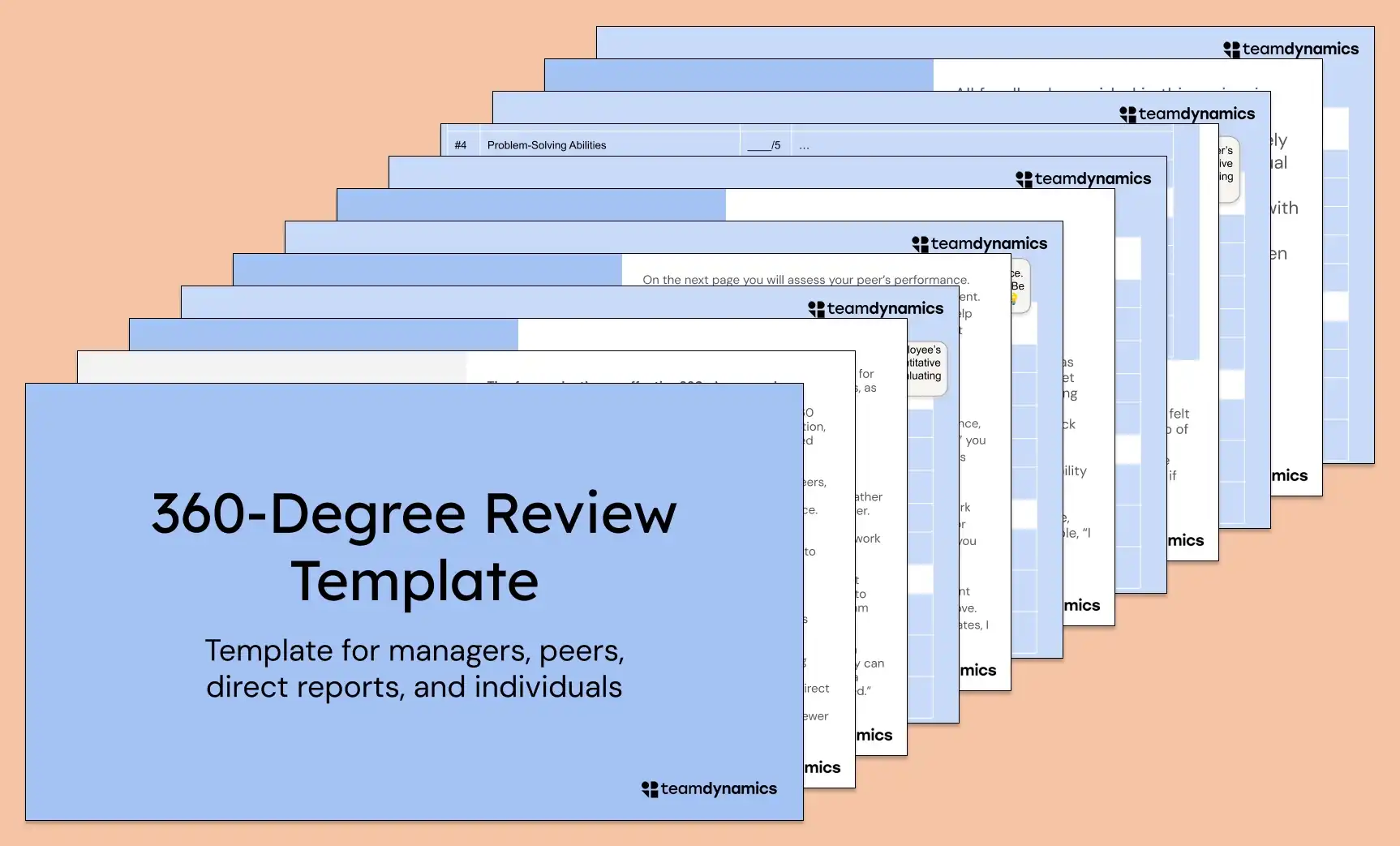
360-Degree Review Template and Guide for Managers, Peers and Individuals
Get a head start on 360 reviews with this downloadable 360-degree review template, including sections for managers, peers, subordinates, and self-evaluation.
Open free resource