
Employee coaching templates
Download editable coaching templates in PowerPoint or Google Slides, plus PDF. Use a filled-in example to prepare a focused TeamDynamics coaching conversation.
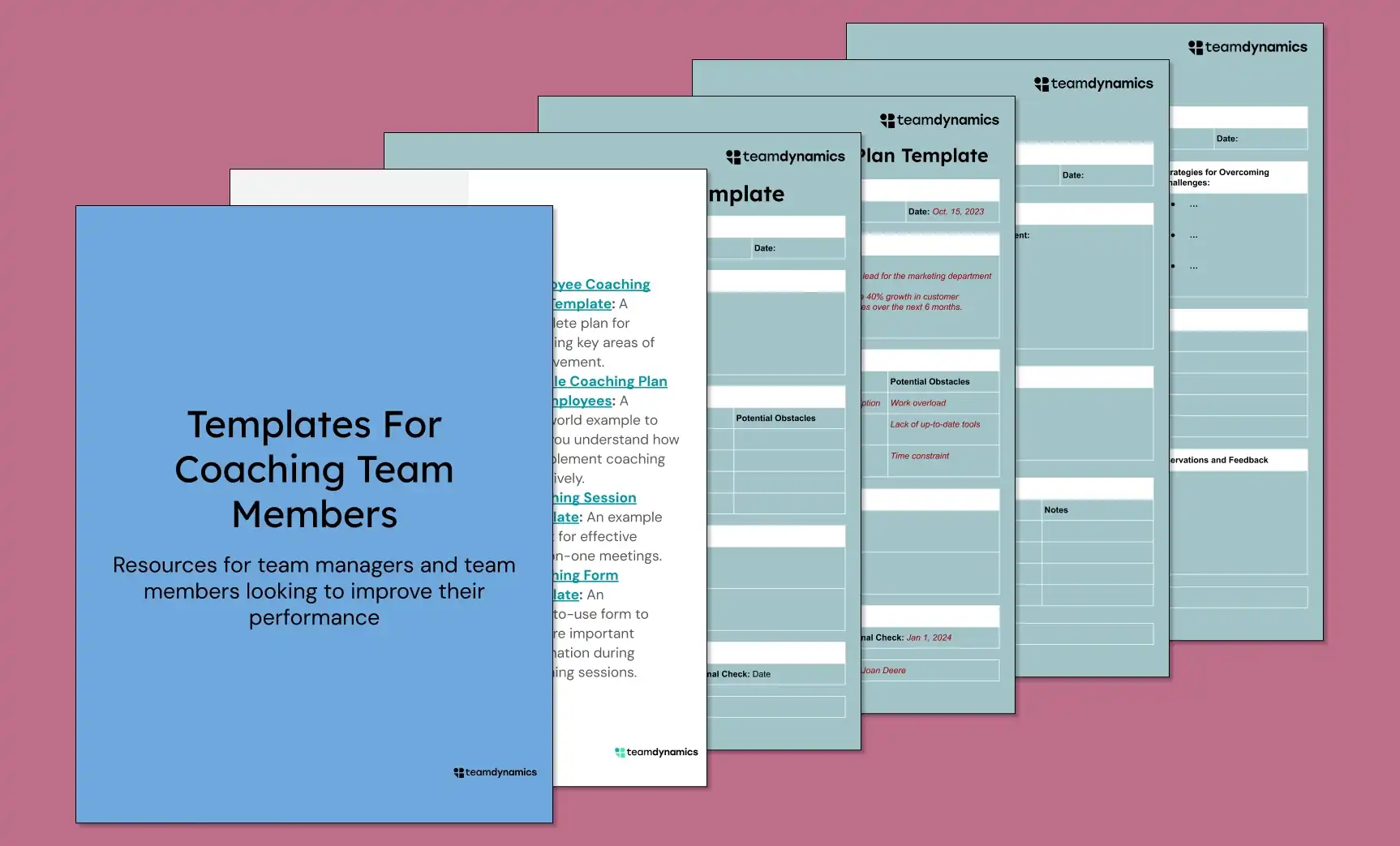
Get my coaching templates
Available as PDF or PowerPoint or Google Slides.
TL;DR
Prepare a coaching conversation around a real work example, an agreed development goal, a chance to practice, and manager support. Use the template to record what you will try and how you will follow up.
Choose an editable coaching template
Request PowerPoint or make a copy in Google Slides to adapt the coaching templates. A PDF version is also available. Use the templates for preparation, the conversation, and follow-up. For the discussion process, read the how to coach team members playbook; for a recurring meeting record, use the weekly one-on-one template.
A filled-in coaching conversation example
Example situation: A colleague wants to make project updates easier for other teams to act on. Use the plan to connect a development goal with practice and manager support.
| Field | Example entry |
|---|---|
| Development goal | Help recipients understand the status, decision needed, and next step without a follow-up meeting. |
| Recent work example | The latest update described completed tasks but did not state the decision the receiving team needed to make. |
| Question to explore | What did you expect the reader to do, and what context would help them do it? |
| TeamDynamics context | Discuss whether the team's Communicating pattern helps quick sharing but leaves action requests implicit. Check this interpretation against the person's experience. |
| Practice | For the next two updates, open with status, decision needed, owner, and date. |
| Manager support | Share one clear example and review the first draft together. |
| Follow-up | At the next one-on-one, compare both updates and ask recipients whether the next action was clear. |
Your TeamDynamics rapid result · 2 minutes
What makes your team tick?
Answer twelve quick questions about how your team works, then enter your email to see your free TeamDynamics preview.
When we have team meetings…
Question 1 of 12 · Choose an answer to startPrepare the conversation with TeamDynamics
Review the shared team profile and available private CoDynamics guidance before choosing questions. TeamDynamics helps explain the context in which someone works: how information is shared, how input is considered, how decisions happen, and how plans move forward.
Ask the person where the team's habits help them and where they need support. Keep an open mind about whether the obstacle involves a skill, an expectation, resources, or a working agreement. A profile does not establish an individual's performance or tell you why something happened.
Complete the coaching plan together
- Agree the goal. Ask what the person wants to do more effectively and connect it to their work.
- Explore an example. Describe what happened, its effect, and the person's perspective.
- Choose a practice opportunity. Make the next action small enough to try in current work.
- Record support. State what the manager will provide or change.
- Review evidence. Set a date and decide what examples will show whether the practice helped.
A copyable coaching note
Goal: [development goal]. Example discussed: [situation and observed behavior]. The person's perspective: [their account]. Next practice: [action and opportunity]. Manager support: [specific support]. Review: [date and work examples].
Keep notes in the organization's approved location and agree what will be shared. Coaching can inform development; use the organization's normal process for formal performance decisions.
Follow up and adjust
Begin the next conversation with the agreed practice. Ask what changed, what was difficult, and what support would make the next attempt easier. If the obstacle is a recurring team habit, bring the working agreement back to the team rather than making one person responsible for adapting alone. The team norms worksheet can help record that shared change.
Put this into practice
Use a practical playbook to turn this guidance into a team conversation and a clear next step.

Frequently asked questions
Questions, answered.
What formats can I download?
Choose editable PowerPoint, a copy in Google Slides, or PDF using the request form.
What should a coaching plan include?
Include a development goal, a recent work example, the person’s perspective, a practice opportunity, manager support, and a review date.
Can I use the filled-in example?
Yes. Adapt the structure to a real situation, an agreed development goal, and the support the person needs.
How does TeamDynamics support coaching?
The team profile and available private CoDynamics guidance help a manager ask specific questions about the person’s working context and support needs.
Does a TeamDynamics result rate employee performance?
No. A team profile describes shared working patterns; personal preferences separately inform private CoDynamics. Discuss performance using appropriate work evidence and organizational processes.
How is this different from a one-on-one agenda?
A one-on-one can cover many topics. A coaching plan follows a particular development goal across practice and review.
What if the issue is a team habit?
Discuss which working agreement or manager support should change. Do not assume the person alone must adapt.
Where is the full coaching process?
See the coaching team members playbook for preparation and conversation guidance.
Keep building
More free tools for your team.
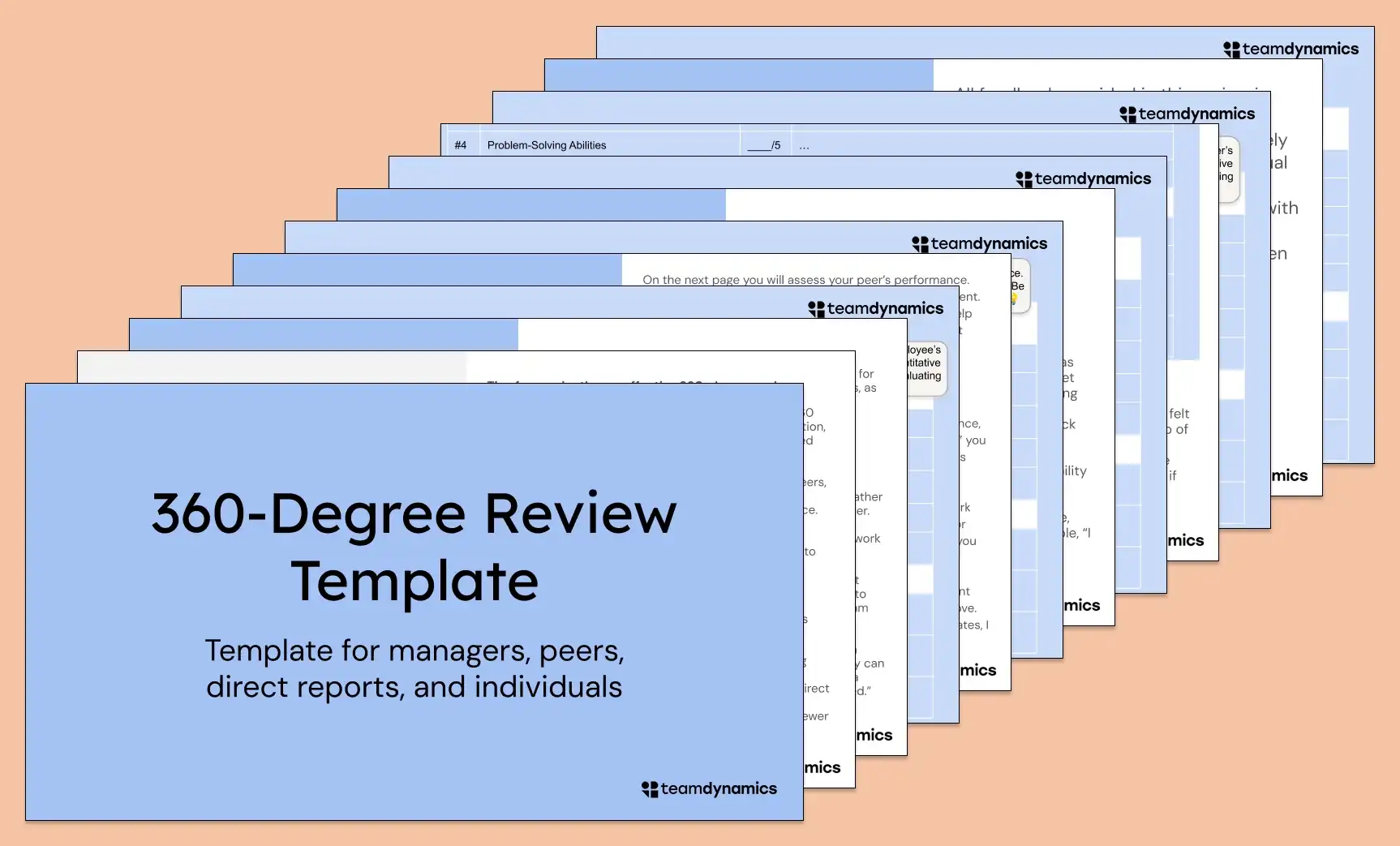
360-Degree Review Template and Guide for Managers, Peers and Individuals
Get a head start on 360 reviews with this downloadable 360-degree review template, including sections for managers, peers, subordinates, and self-evaluation.
Open free resource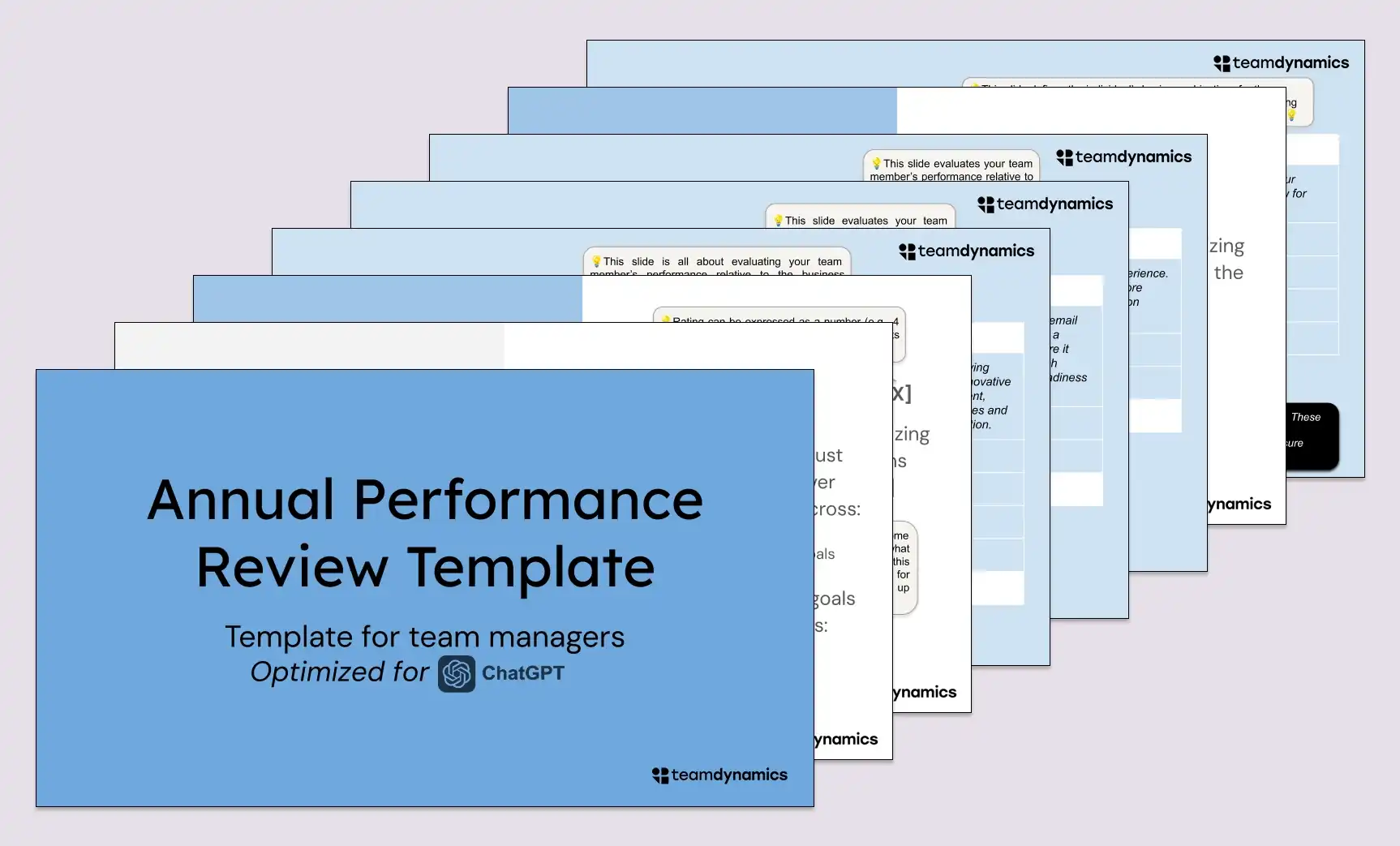
Annual Employee Performance Review and Goal Setting Template (Optimized for ChatGPT)
Get a head start writing your employees' annual reviews with this downloadable annual review template. It's already optimized for ChatGPT (including prompts!).
Open free resource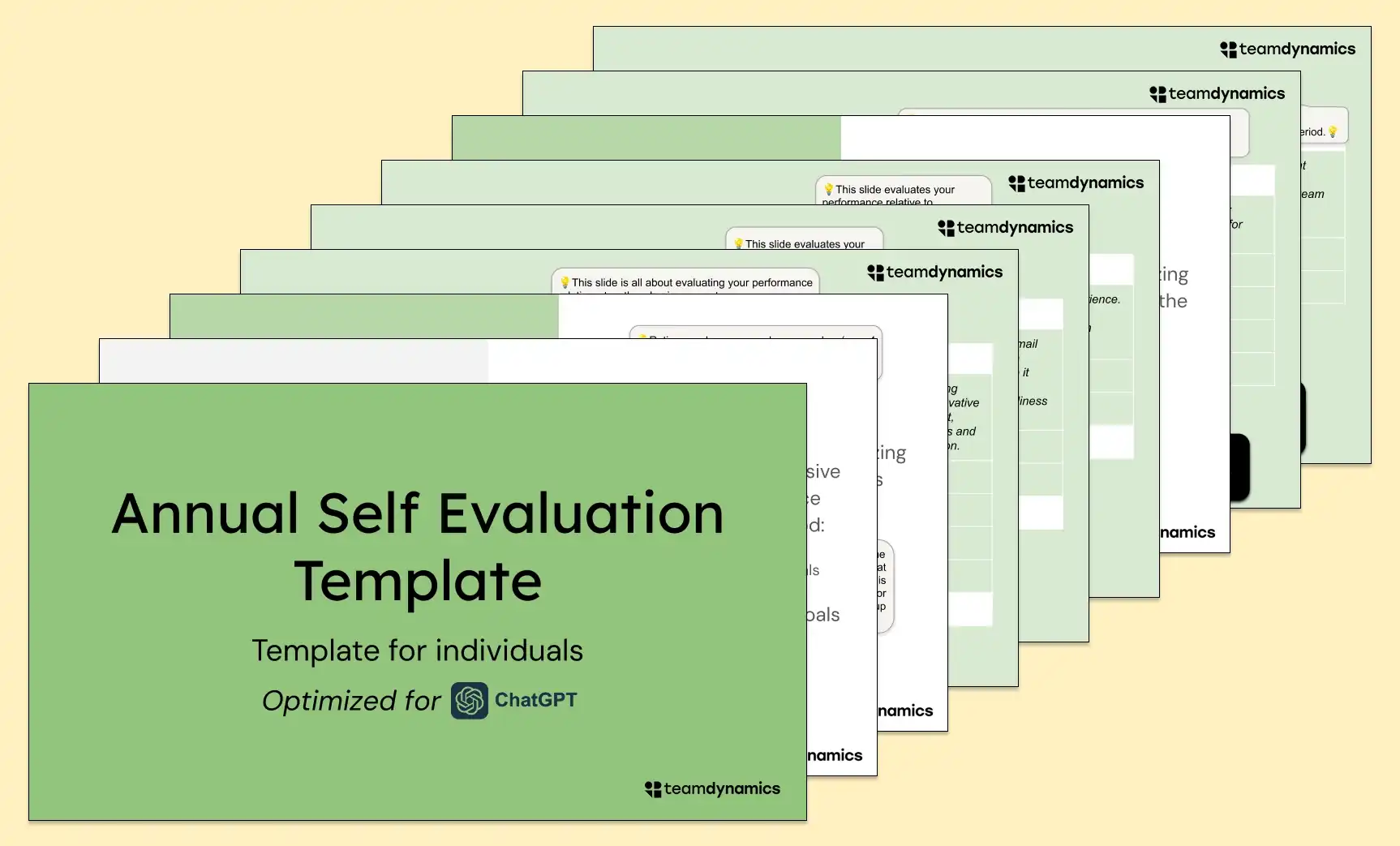
Annual Self Evaluation Performance Review and Goal Setting Template (Optimized for ChatGPT)
Put your best foot forward when writing your self evaluation with this downloadable review template. Oh, and it's optimized for ChatGPT (including prompts!)!
Open free resource