A DiSC team-building session is useful when colleagues can connect style language with a real interaction. What helped them understand a request? What made a discussion harder? What would they like the team to do differently next time?
This manager’s guide retains small- and large-group activities, explains the four basic styles, and adds a practical follow-up process. Use the descriptions as conversation prompts rather than assigning people to fixed roles or activities.
What DiSC describes
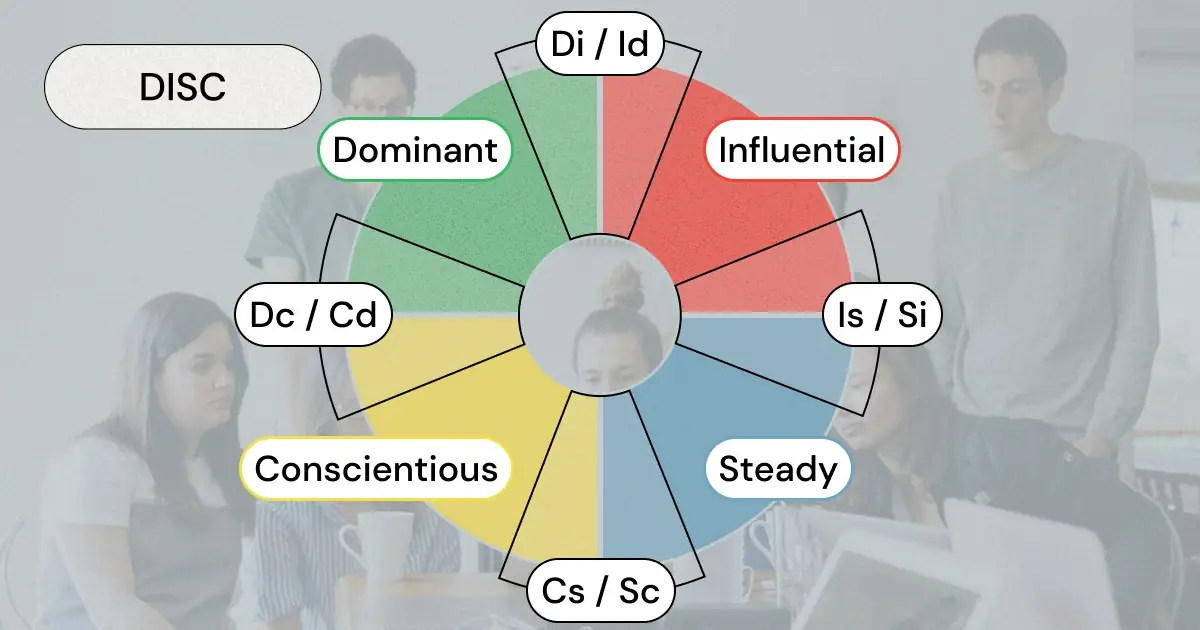
Everything DiSC describes individual preferences and tendencies through Dominance, Influence, Steadiness, and Conscientiousness. People can show a blend of styles. Its model is a development tool for discussing relationships and behavior, not a measure of competence.
DiSC is also used by different providers, so reports and delivery vary. Everything DiSC Workplace and the Catalyst platform have learning and group applications. Catalyst Your Groups includes group maps and insights. Confirm the actual product and platform access before planning a session.
The four styles as discussion prompts
- Dominance (D): Often associated with directness and a focus on results. Ask how much context the person needs and how they want a decision framed.
- Influence (i): Often associated with enthusiasm and social interaction. Ask how they like to explore ideas and what helps turn discussion into follow-through.
- Steadiness (S): Often associated with support and a steady pace. Ask what helps them prepare for a change or raise a concern.
- Conscientiousness (C): Often associated with accuracy and careful analysis. Ask what evidence or detail is useful for the particular decision.
These are tendencies to explore, not prescriptions. A D result does not make someone the team leader, an i result does not establish presentation skill, an S result does not require a support role, and a C result does not make someone responsible for every detail. Ask the person and consider the work.
The manager’s role in a useful session
- Choose a purpose. Focus on one recurring interaction, such as a handoff or planning meeting.
- Prepare participants. Explain the assessment, how results will be used, and what sharing is optional. Give people time to review their report.
- Model curiosity. Invite colleagues to explain what fits and what does not. Ask for feedback on your own communication.
- Offer different ways to contribute. Combine written reflection, pairs, and discussion so participation does not depend on speaking first.
- Plan follow-through. Leave time for an agreement, owner, and review date.
Use the provider’s guidance where appropriate and choose facilitation support suited to the group. The goal is a clearer working request and an agreement people can try, not a perfectly balanced distribution of types.
Four activities for small groups
- Decision challenge, 15 minutes: Give the group a realistic choice with a deadline. Each participant states an option, the evidence needed, and one concern. Rotate the person who summarizes the decision rather than assigning leadership by style.
- Creative brainstorming, 15 minutes: Start with silent notes, share ideas in turn, and agree criteria before choosing one to explore. Ask which parts of the process helped people contribute.
- Collaborative project, 20 minutes: Plan a small shared task with explicit dependencies. Let members volunteer for work according to skills, interests, and capacity. Discuss where requests need more clarity.
- Detail review, 15 minutes: Review a short brief or project timeline together. Each person identifies an ambiguity or missing dependency. Agree which details matter and who will resolve them.
All four activities are open to every style. The older approach of reserving competition for D, brainstorming for i, collaboration for S, or detail work for C can restrict learning. Instead, use a varied set of exercises and ask what each person found helpful.
Three activities for larger groups
- Mixed-group challenges: Form groups around availability and the task, not a required personality formula. Give each group the same problem and compare how it communicated and decided.
- Communication role-play: Practice making a request in different ways: a concise summary, a conversation, a preparation note, or a detailed brief. Ask the receiver what was clear. Avoid caricaturing a style or asking participants to imitate a colleague.
- Large collaborative project: Plan an event, workshop, or cross-functional deliverable. Record owners, dependencies, decision rights and check-in points. Review the actual coordination process afterward.
For a large session, share written instructions and use a facilitator or group lead to keep the purpose clear. Allow a written debrief so people can contribute observations after the exercise. Compare process choices without declaring one group’s style the best.
Add a shared view of how the team works
DiSC can support a discussion about adapting to one another’s styles. You may also want to understand the working pattern that the whole team follows: how information reaches people, how evidence is evaluated, who decides, and how plans develop.
TeamDynamics measures shared team behaviors across Communicating, Processing, Deciding, and Executing. In Pro, participants describe how the team works; completed responses contribute to the shared result. Personal preferences separately inform private CoDynamics and do not determine the team profile.
Put your DiSC conversation to work
Use style insights to discuss individual requests, then explore discussion slides for the team’s shared habits. Agree how updates, decisions, and handoffs will work in practice.
The two perspectives can work together. For example, a colleague might prefer detailed preparation while the team routinely makes decisions in informal conversations. Discuss both the request and the shared process before agreeing how the next decision will be handled.
Measure follow-through using the work
Choose a baseline related to the original issue. If handoffs lacked context, review a few recent examples. If meetings ended without a decision owner, note whether that information is recorded after the next meetings. Ask participants whether the agreement is clear and usable.
Keep the review small and specific. A positive workshop response is useful feedback, but it does not establish that the assessment caused better performance. Check workload changes, new processes, and other factors when discussing outcomes.
- Write the agreement in a shared location.
- Name an owner and the support needed.
- Try it for a defined period, such as two weeks.
- Review actual examples and ask for participant feedback.
- Keep, adjust, or replace the agreement.
Keep style language constructive
Describe behavior and its effect: “The request did not include a deadline” is more actionable than “You do that because you are a C.” Give people room to challenge an interpretation. Use skills, experience, interests, and task requirements when allocating work.
Use TeamDynamics for development and collaboration. Do not use its team result or private CoDynamics as a candidate screen or a prediction of job performance. For your next session, explore a sample Team Profile or compare DiSC alternatives. The assessment tools guide can help you choose around the question you want to answer.