
Forming · 09
Give new hires the unwritten operating manual.
Give a new teammate an early guide to the group's habits and language. Help them interpret the unwritten rules faster while the team learns how the new member prefers to work.
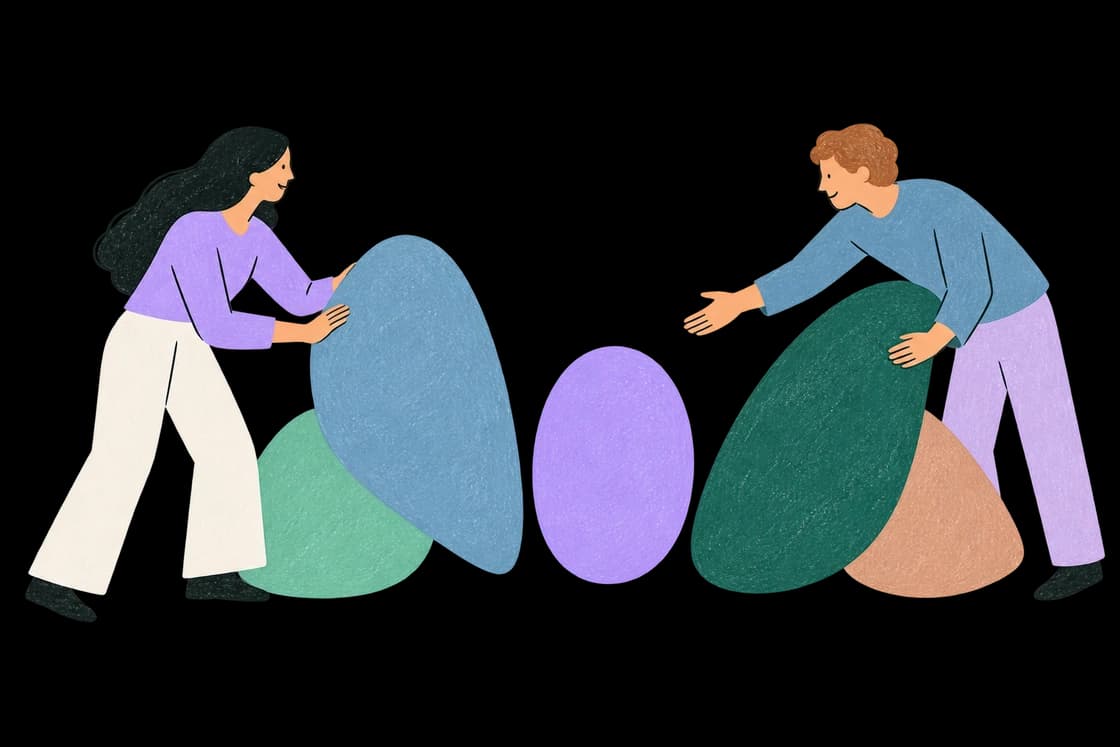
MAKE THE PATTERN DISCUSSABLE
Start with what the team is experiencing.
Job descriptions explain the role; onboarding plans explain the tasks. Neither usually explains how the team itself works. TeamDynamics gives the new hire and manager shared language for the patterns they will experience together.
A SIMPLE PLAYBOOK
From result to a better way of working.
The assessment creates the shared evidence. The web report and facilitation presentation help the team use it together.
- 01
Share the team context
Introduce the team’s current profile as a guide to patterns—not a set of rules the new person cannot question.
- 02
Capture personal preferences
When invited, the new participant adds their view of the team and can reuse their preference profile where appropriate.
- 03
Discuss the fit
Use private CoDynamics guidance to make early coaching and expectation-setting more specific.
THE RELEVANT DIMENSIONS
Put precise language around the work.
TeamDynamics describes four parts of team behavior. For this moment, these are especially useful places to begin.
START THE CONVERSATION
Three questions worth asking.
- 01
Which team habit will be most useful for a new person to understand?
- 02
Where might our default style be easy to misread?
- 03
What should we explain explicitly rather than expect someone to infer?
KEEP EXPLORING
One framework, more team moments.
YOUR TEAM, MADE VISIBLE
Give this conversation a shared starting point.
Add the complete roster once. Everyone contributes to the team result and receives guidance they can use.