TeamDynamics
Sign inStart now

The Fast and the Furious

IRAS, The Fast and the Furious

The IRAS team, known as "The Fast and the Furious," thrives on open-ended, flexible communication and quick decision-making. With a penchant for gathering information in an informal, conversational manner, these teams draw on the insights of key individuals and rely heavily on their leaders to set clear objectives and dynamically adapt plans in response to new information. This approach not only fosters agility but also empowers standout team members, allowing them to significantly influence the team's direction. This is particularly effective in dynamic environments where rapid growth and change are the norms, such as tech startups or project-based ventures, where their ability to deliver impressive results in short bursts of effort shines.

However, this informal structure and reliance on specific individuals can make it a challenge for the team to manage external expectations and collaborate effectively with other groups. Frequent shifts in direction can lead to fatigue among team members, potentially impacting long-term alignment and effectiveness.

Informal

Communicators

Information is surfaced and shared organically.

Relational

Processors

The source of the information matters when it is being evaluated.

Authoritative

Deciders

Decision is driven by direction from team leadership.

Spontaneous

Executors

Lightweight plans favor agility and adaptability.

A shared language

Words that typically describe IRAS teams.

Informalimpromptuinformalimprovisedconversation
Relationalempathyinfluencerelationshipsnarrative
Authoritativeimpactdirectionindividualismspeed
Spontaneoussurprisedadaptationdoingevolved
01

Characteristics of IRAS teams:

  • IRAS teams have open and flexible communication, fostering a conversational atmosphere that encourages rapid information exchange and idea generation.
  • Standout team members can earn significant autonomy under strong leadership, allowing them to play an outsized role on the team’s direction.
  • IRAS teams are known for their agility, with leaders adapting plans on the fly to respond to new developments and challenges.
02

Where IRAS teams excel:

  • Capable of producing outstanding accomplishments over concentrated, brief bursts of effort. This ability to intensely focus and deliver high-impact results in short time frames is invaluable in projects where quick turnaround is critical.
  • High-performing individuals often thrive as leadership empowers them to guide the team's trajectory. This empowerment can foster personal growth and leadership development.
  • IRAS teams often excel in fast-growing, dynamic organizations like startups and fast-changing environments. Their members, especially early ones, can act as "super-connectors," leveraging an informal and flexible communication style to draw out valuable insights from an unstructured environment.
03

Potential blind spots for IRAS teams:

  • The IRAS team’s informal and spontaneous nature can make it hard to manage external expectations and collaborate with other teams. Without structured information flow and clear planning, insights can sometimes appear “at random,” and it can be difficult to synchronize efforts and ensure that stakeholders have a consistent understanding of project statuses and outcomes.
  • The dynamic environment fostered by IRAS teams, while making them nimble and adaptable, can also lead to fatigue among team members. Frequent shifts in leadership direction can cause uncertainty and strain, as team members continually adjust to new objectives and strategies without warning (or full context).
  • IRAS teams can become overly reliant on specific standout individuals. This can lead to a lack of broad-based alignment within the team, as other members may feel disconnected from decision-making processes or unclear about the team’s direction.
04

Areas of growth for IRAS teams:

  • Invest in developing future leaders within the team by creating formalized opportunities for more team members to participate in, and eventually lead, critical decision-making processes.
  • Build relationships with the people in other teams who depend on your work. Use those connections to share outputs and updates, especially when your direction changes. These informal channels put the team’s conversational strengths to work outside its own boundaries, helping collaborators keep pace and know what to expect.
  • Transparent communication from leadership about the rationale behind decisions, and updating team members throughout the decision-making process, bolsters team alignment and buy-in.
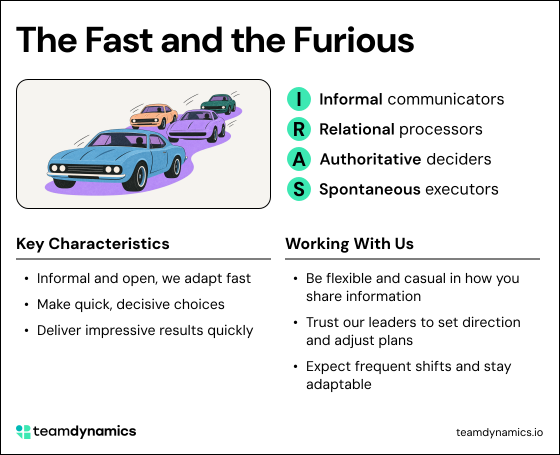
IRAS quick reference

Keep this overview handy for conversations about how your team works. It describes the team type, not anyone's personal results.

IRAS

The Fast and the Furious

I
Informal communicators
R
Relational processors
A
Authoritative deciders
S
Spontaneous executors

Key characteristics

  • Informal and open, we adapt fast
  • Make quick, decisive choices
  • Deliver impressive results quickly

Working with us

  • Be flexible and casual in how you share information
  • Trust our leaders to set direction and adjust plans
  • Expect frequent shifts and stay adaptable

Download reference cardSVG · printable reference card

Discover your team type

Does your team sound like The Fast and the Furious?

Take the TeamDynamics assessment to discover how your team communicates, processes information, makes decisions, and gets work done.

Find out now

Your team is more than a type

Turn the shared language into a better way of working.

Find the strengths your team can build on and the habits that may be holding it back. Explore how each person fits, then use tailored recommendations to make room for different ways of working.

Start now