
TeamDynamics vs. CliftonStrengths
Put your team’s talents to work together.
Turn individual strengths into better teamwork. TeamDynamics directly assesses the habits your team has developed—how you communicate, decide and deliver—and shows each person how their preferences fit.
$39 per participant · One-time purchase
One purchase includes: your team report, private personal insights, manager guidance and a ready-to-run presentation personalized to your results. Your personal insights stay private.
Review your team and total before payment. No subscription.
Your CoDynamics
Communicating
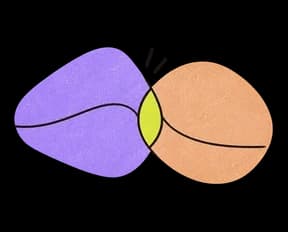 Potential tension
- Your preference
- Informal
- Your team’s behavior
- Ordered
In this example: You prefer talking things through. This team expects a written record.
An agreement to try: Put deadline changes in the project record and tag the next owner.
Helping teams from startups to Fortune 100 corporations.












Understand the habits. See your fit. Agree what to change.
 Understand the routines behind deliveryCliftonStrengths and its Team Grid show the talents people bring. TeamDynamics asks how the team actually works: how updates travel, decisions close and plans turn into action.
 Give talented colleagues a clearer way to workTwo capable colleagues can still disagree about how much planning is enough. Compare personal preferences with the team’s habits, then discuss where the process needs a clearer agreement.
 Leave the session with an agreement to testUse the presentation personalized to your results to choose a change, an owner and a review date. Your team report, private personal insights and manager guidance come in the same purchase.
See how you could use it
Strong people. Shifting plans. The same deadline friction.
Your team knows each person’s strengths, but plans keep changing midweek. Some people enjoy adapting; others struggle to protect dependent work.
Your TeamDynamics · OLAS
Executing
Strongly Spontaneous
Strength increases away from the center.
Read the result: The sample team is Spontaneous in Executing: it tends to adapt as work unfolds. That can help it respond quickly. The manager can also ask where a changing plan creates avoidable rework.
Explore this sample result- Ask the team
- “Which parts of this project benefit from flexibility, and which commitments does someone else need us to keep stable?”
- An agreement to try
- Keep the weekly handoff date fixed. Put new ideas in a shared change list; the project owner confirms any change affecting dependent work before the team acts on it. Review rework after two delivery cycles.
Your team can use its talents inside a clearer delivery routine. The agreement changes the work without asking people to change their strengths.
Preview the discussion guideAssess the team itself. Then see how each person fits.
Everyone answers questions about how the team works and their own preferences. Their descriptions of the team form its shared profile across Communicating, Processing, Deciding and Executing. Each person’s preferences are then compared with that profile in private CoDynamics insights. The assessment takes about 10–15 minutes per person.
You can prefer talking things through and still work on a team that expects written updates. Understanding both sides gives you something specific to discuss and change together. Your results describe current working habits; your team chooses the agreements to put into practice.
Bring this conversation to your team.
Your team profile, private insights, manager guidance and personalized presentation. $39 per participant, paid once.
In their own words.
TeamDynamics and CliftonStrengths, compared.
CliftonStrengths, formerly StrengthsFinder, identifies individual talent themes. Its Team Grid brings those results together. TeamDynamics directly asks how the team works, then connects each person’s preferences to that shared context.
| What to compare | TeamDynamics Pro | CliftonStrengths 34 + Team Grid |
|---|---|---|
| Starting point | Direct assessment of shared team habits across Communicating, Processing, Deciding and Executing. | Individual talent themes, ranked across 34 themes in CliftonStrengths 34. |
| Personal and team insight | Shared team profile; private personal-to-team CoDynamics insights. | Individual strengths reports. The Team Grid maps members’ strengths to show collective patterns and gaps. |
| Putting it to work | Manager guidance and a team discussion presentation personalized to your results. | Strengths development resources and a Team Grid; coaching and additional team offerings are available. |
| Assessment experience | About 10–15 minutes per person, followed by your team discussion. | Gallup describes its assessment as taking about 30 minutes. |
| Price and package | $39 USD per participant, paid once. Team profile, private insights, manager report and discussion presentation included. | CliftonStrengths 34: $59.99 USD per person; Top 5: $24.99. Team Grid is free for up to five assessed members; larger grids require a subscription. |
Sources checked October 27, 2026: CliftonStrengths reports and prices; Team Grid features and subscription terms; How the assessment works. Prices refer to the listed US products and packages.
TeamDynamics is independent of Gallup.
What to expect
Bring your team together
Add everyone taking part and review your total. After payment, we email their assessment invitations.
Discover how you work
Each teammate shares their perspective in a 10–15 minute assessment. See the working styles that shape your team.
Put insight into action
Explore your team profile and private personal insights. Use your discussion guide to choose what to try together.
Before you choose
Common questions.
Why choose TeamDynamics instead of StrengthsFinder for team building?
Choose TeamDynamics to improve the routines that turn individual talent into teamwork. It directly assesses shared team habits and compares each person’s preferences with that profile. You get a team report, private personal insights, manager guidance and a presentation personalized to your results for $39 per participant, paid once.
Are CliftonStrengths and StrengthsFinder the same assessment?
CliftonStrengths is the current name of Gallup’s assessment formerly known as StrengthsFinder. This comparison covers CliftonStrengths 34 and the Team Grid, with Top 5 pricing shown separately.
Can TeamDynamics help if our team already knows its strengths?
Yes. TeamDynamics adds a direct view of shared working habits. Take the TeamDynamics assessment, review the team profile, and use your existing strengths knowledge as additional context for the discussion.
What do we get with TeamDynamics Pro?
A shared team profile, private CoDynamics insights for each participant, a manager report and a personalized team discussion presentation. Explore the sample team report and discussion presentation before buying.
How much does it cost for a team?
TeamDynamics Pro costs $39 USD per participant, paid once. A team of six costs $234 USD before any applicable tax. Include everyone taking part, including the manager. You can review your roster and total before payment.
Who can see our personal insights?
Your shared team profile brings together the team’s responses. Each participant’s CoDynamics insights are private to them. Use the sample personal report to see how personal preferences are compared with the team’s habits.
What happens after we buy?
After payment, we email assessment invitations to your roster. Each teammate takes about 10–15 minutes to respond. Once the team’s responses are in, review your shared profile and use the personalized discussion presentation to agree what to try next.
Choose a clearer picture of your team.
Get the shared profile, private insights and practical discussion guide. $39 per participant, paid once.